

Table of Contents
- What Is CBD and How It Works
- How CBD May Support Joint Stiffness
- What Research Shows About CBD and Joint Stiffness
- How to Use CBD Topicals for Stiffness
- How Long Does CBD Take to Work for Stiffness
- Choosing High-Quality CBD Products
- Serving Guidelines and Safety Considerations
- Tracking Your Results and Symptom Management
- Frequently Asked Questions
Last Updated: September 3, 2026
What Is CBD and How It Works
Cannabidiol, commonly known as CBD, is a naturally occurring compound found in cannabis plants that interacts with your body’s endocannabinoid system. Unlike THC, CBD does not produce a “high” or intoxicating effects. Instead, it works by influencing receptors throughout your nervous and immune systems that help regulate various bodily functions.
The endocannabinoid system consists of receptors, enzymes, and endocannabinoids that your body produces naturally. When you use CBD, it may enhance your body’s ability to regulate discomfort, support physical function, and promote overall wellness. At CBD Online, we’ve seen how cannabidiol affects our customers daily wellness routines, and our experience with USDA Organic hemp products has shown us that CBD works subtly and gradually, not as an immediate intervention.
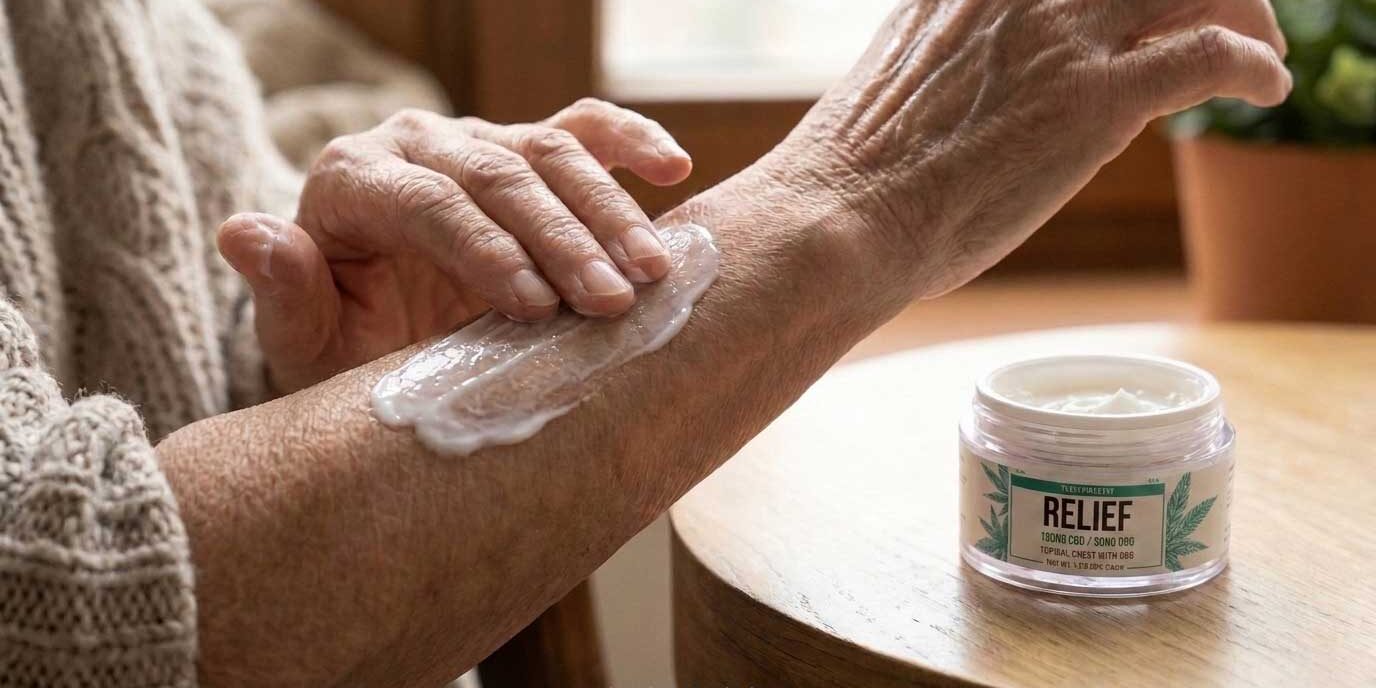
Close-up of hands applying CBD relief cream to a joint area, showing proper massage technique
How CBD May Support Joint Stiffness
Research suggests that CBD may help support joint health through multiple pathways. The compound’s interaction with the endocannabinoid system appears to influence how your body manages discomfort responses and physical function. Read NIH article here.
Reduce Discomfort and Support Joint Health
CBD exhibits properties that may help address discomfort responses in the body. When joint tissues experience stress or overuse, this can contribute to stiffness and reduced mobility. By potentially modulating these responses, CBD may help support more comfortable movement.
The potential of cannabidiol has attracted significant research attention. Many wellness practitioners report that their clients experience improvements in physical comfort after incorporating CBD into their routines. CBD appears to work by addressing underlying aches and discomfort processes rather than just masking discomfort, which means consistent use over weeks is typically necessary before noticeable changes emerge.
Supporting Physical Function and Mobility
Beyond stiffness and aches support, CBD may help maintain physical function and mobility. The endocannabinoid system has receptors throughout muscles and connective tissues, suggesting that CBD’s influence could extend to how your body manages physical performance.
Users frequently report improvements in their ability to move more freely after establishing a consistent CBD routine. Better mobility often leads to increased activity, which itself supports joint health, creating a positive feedback loop where CBD-supported mobility enables more movement.
What Research Shows About CBD and Joint Stiffness
The scientific landscape around CBD remains evolving. While preliminary research suggests therapeutic potential, strong clinical evidence specific to joint stiffness is still developing.
Clinical Trials and Scientific Evidence
Clinical trials examining CBD’s effects on joint-related conditions are limited in number but growing. Most existing research focuses on broader inflammatory conditions rather than joint stiffness specifically. What the available research indicates is that CBD may influence inflammatory markers in laboratory settings, though translating these findings into human applications requires caution and continued investigation.
The reality is that clinical evidence for CBD and joint stiffness specifically lags behind anecdotal reports. This doesn’t mean the compound is ineffective; it means the research community hasn’t yet conducted the large-scale, long-term human trials that would provide definitive answers.
Anecdotal Evidence vs. Clinical Research
Thousands of individuals report meaningful improvements in joint stiffness after using CBD products. Yet clinical trials have not yet validated these experiences at scale. This discrepancy reflects how anecdotal evidence captures real-world use with all its variables, different dosages, product types, individual physiology, and lifestyle factors, while clinical trials control variables rigorously.
Neither source of evidence should be dismissed. Anecdotal reports suggest CBD warrants serious investigation, while clinical research provides the caution necessary to avoid overstating benefits. A balanced approach acknowledges both: CBD appears promising based on user experiences and preliminary science, but comprehensive clinical validation remains incomplete.
How to Use CBD Topicals for Stiffness
Application Techniques for Best Results
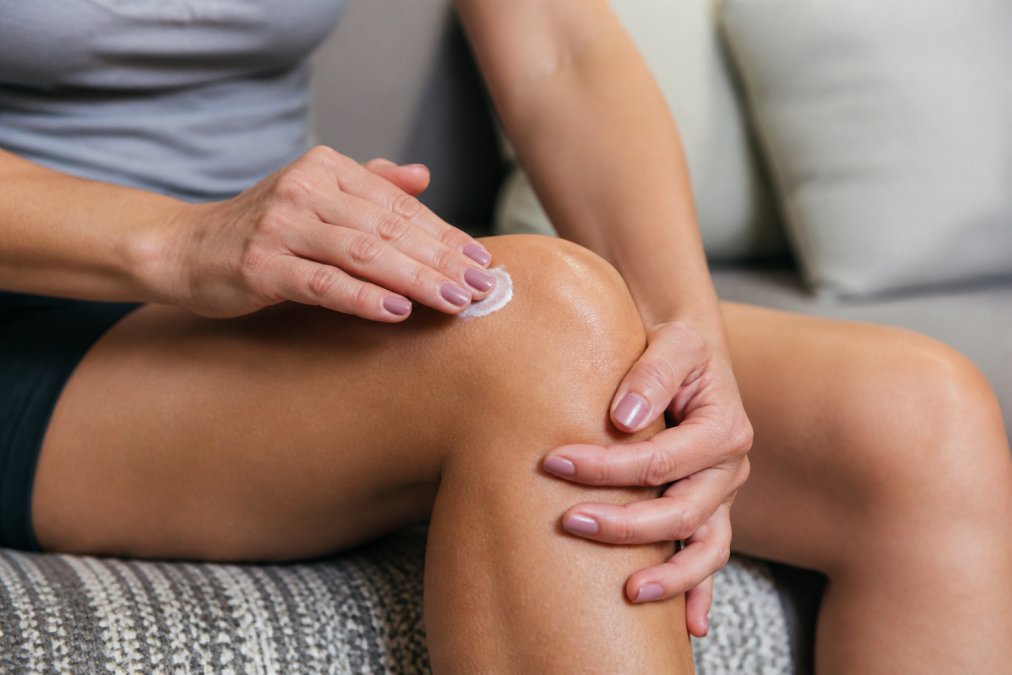
Topical CBD products deliver cannabidiol directly to affected areas. Begin by cleansing the area thoroughly, then apply a generous amount directly to the joint or affected area, using circular motions to massage the product into the skin for 2-3 minutes.
Consistency matters more than quantity. Many users find that applying topical CBD twice daily, morning and evening, produces better results than sporadic use. Temperature can enhance absorption, some users report better results when applying after warm showers or baths, when skin pores are more open.
The quality of the product directly impacts results. USDA Organic hemp products, third-party tested for potency and purity, will perform better than untested alternatives. At CBD Online, we recommend our Hempworx relief creams specifically because they’re formulated for targeted joint support and manufactured to rigorous standards.
Topical vs. Oral CBD: Which Is Right for You
Topical CBD delivers cannabidiol directly to localized areas without significant bloodstream entry, making topicals ideal for targeting specific joints experiencing stiffness. Results often appear within days to weeks of consistent application.
Oral CBD enters your bloodstream and distributes throughout your body, supporting overall balance. Oral CBD typically requires 2-4 weeks of consistent use before noticeable effects emerge, but benefits may extend beyond localized areas.
Many experienced users employ both approaches simultaneously. Topical application addresses specific joint stiffness while oral CBD supports systemic wellness. If you experience stiffness in one or two specific joints, topicals are typically your best starting point. If you have multiple areas of concern, oral CBD becomes more relevant. If you’re unsure which approach suits your situation, our team is here to help, need help choosing the right CBD product?
How Long Does CBD Take to Work for Stiffness
Timeline Expectations and Consistency
Topical CBD often produces noticeable effects within 3-7 days of consistent application. Oral CBD requires more patience, most users don’t notice meaningful changes until 2-4 weeks of consistent daily use.
Consistency is non-negotiable for accurate assessment. Using CBD sporadically makes it impossible to evaluate whether it’s actually working. Individual variation is substantial, with factors including body weight, metabolism, the severity of your stiffness, diet, and overall health all influencing how quickly you notice changes.
The practical approach: commit to 4 weeks of consistent use before deciding whether CBD is right for you. Track your mobility, stiffness levels, and overall comfort during this period. After 4 weeks, you’ll have reliable data about whether the product is delivering meaningful benefits.
Choosing High-Quality CBD Products
Third-Party Testing and Certificates of Analysis
Product quality determines whether you’re actually getting CBD and whether the product is safe. Third-party testing is non-negotiable for quality assurance.
Reputable CBD companies submit their products to independent laboratories for testing. These labs verify the CBD content, check for contaminants like pesticides and heavy metals, and confirm the absence of excessive THC. The result is a Certificate of Analysis (CoA), a detailed report showing exactly what’s in the product.
When evaluating CBD products, always request the CoA. What to look for: CBD potency matching the label claim (within 10%), non-detectable or minimal THC (less than 0.3%), and clean results for pesticides, heavy metals, and microbial contaminants. At CBD Online, every product comes with accessible third-party testing documentation.
Full-Spectrum, Broad-Spectrum, and Isolate Explained
Full-spectrum CBD contains all compounds naturally present in the hemp plant, including CBD, minor cannabinoids, terpenes, and trace amounts of THC (less than 0.3%). These products use the “entourage effect,” the theory that compounds work synergistically to produce better results than CBD alone.
Broad-spectrum CBD removes THC while retaining other beneficial compounds. This approach offers many benefits of full-spectrum products without THC concerns.
CBD isolate is pure cannabidiol with all other compounds removed. Isolates offer precise dosing and zero THC, but may produce less noticeable effects than full or broad-spectrum products.
For joint stiffness specifically, full-spectrum and broad-spectrum products typically outperform isolates. Your choice should balance effectiveness against your personal preferences regarding THC and compound complexity.
Serving Guidelines and Safety Considerations
Finding Your Optimal Serving
CBD serving lacks official guidelines because the FDA hasn’t established recommended amounts. Most users start with lower amounts and gradually increase until they notice meaningful effects. For topical products, start with a small amount and increase as needed. For oral CBD, typical starting range is from 5-10 mg daily, increasing by 5-10 mg weekly until you achieve desired results.
Factors influencing your ideal amount include body weight, the severity of your stiffness, individual metabolism, and the product’s potency. The practical approach: start low, go slow, and track results. Keep a simple log noting your amount, how you feel, and any changes in stiffness or mobility. Most users find their optimal serving within 2-4 weeks.
Potential Side Effects and Drug Interactions
CBD is generally well-tolerated, but side effects do occur in some users. Common mild effects include dry mouth, drowsiness, and reduced appetite. These typically diminish as your body adjusts to CBD use.
More significant concerns involve drug interactions. CBD inhibits CYP3A4 and CYP2C19 enzymes in your liver, the same enzymes that metabolize many medications. Medications of particular concern include blood thinners, immunosuppressants, and certain psychiatric medications. If you take any prescription medications, consult with your healthcare provider before starting CBD.
The interaction risk increases with higher CBD amounts. Topical CBD carries minimal interaction risk since absorption is localized. Oral CBD, particularly at higher levels, poses greater interaction potential.
Tracking Your Results and Symptom Management
Establishing a tracking system helps you evaluate CBD’s effectiveness objectively. Create a simple daily log noting your stiffness level (1-10 scale), mobility (how easily you can move), and overall comfort. Record this information at the same time each day, ideally morning and evening.
After 2-4 weeks of tracking, review your data. Look for trends: Is your stiffness decreasing? Are you moving more easily? Include other factors in your tracking: sleep quality, stress levels, activity level, and diet. These variables significantly influence joint stiffness and can confound your assessment of CBD’s effects. Share your tracking data with your healthcare provider to help them understand whether CBD is beneficial for you.
Does CBD help with joint stiffness? The honest answer is: the evidence suggests it may, but individual results vary significantly. What we know is that CBD appears to support balance and physical function through established biological mechanisms. At CBD Online, we’ve worked with thousands of customers over the past decade who report meaningful improvements in mobility and comfort after incorporating CBD into their wellness routines. Our USDA Organic hemp products, backed by third-party testing and a 30-day money-back guarantee, provide a risk-free way to evaluate whether CBD works for your specific situation. Start with our Hempworx relief creams for targeted joint support, or explore our full-spectrum oral products for systemic wellness benefits. Discover why thousands of customers trust CBD Online for their joint comfort needs.
Frequently Asked Questions
How long does it take for CBD to help with joint stiffness?
Timeline varies based on the delivery method and individual factors. Topical CBD applications may begin supporting comfort within 15-45 minutes for localized stiffness, while oral products typically take 30 minutes to 2 hours. Consistent daily use over 2-4 weeks often yields more noticeable results as CBD accumulates in your system. Bioavailability and body composition affect how quickly your body processes cannabidiol. Keep a symptom journal to track when you notice changes in your mobility and stiffness levels.
What type of CBD product is best for joint stiffness?
For localized joint stiffness, topical CBD creams and balms allow direct application to affected areas, offering targeted support without systemic effects. Oral products like tinctures and gummies support overall wellness and may help with multiple areas of stiffness. Full-spectrum CBD contains additional cannabinoids and terpenes that may enhance therapeutic potential, while broad-spectrum offers similar benefits without trace THC. Start with products that have been third-party tested and include a certificate of analysis to verify quality and cannabidiol content.
Are there any drug interactions I should know about with CBD?
CBD can interact with certain medications, particularly those metabolized by the CYP3A4 enzyme, including some blood thinners, heart medications, and immunosuppressants. If you take prescription medications, consult your healthcare provider before adding CBD to your routine. CBD may also interact with over-the-counter supplements. Inform your doctor about any CBD use, especially if you’re managing chronic conditions or taking multiple medications. Your healthcare provider can assess your specific situation and dosage needs.
How do I know if a CBD product is actually high-quality?
Look for third-party testing results and a certificate of analysis that verifies cannabidiol content, absence of contaminants, and potency claims. USDA Organic certification indicates the hemp was grown without synthetic pesticides or fertilizers. Reputable brands provide transparent sourcing information and have been in business long enough to build customer trust. Check for standardized dosing on product labels and avoid products making disease-cure claims. Products used daily by experienced users and backed by money-back guarantees often reflect genuine confidence in quality and effectiveness.
