

Table of Contents
- What Are Natural Sleep Aids and Why Adults Choose Them
- Comparison Table: Natural Sleep Aids at a Glance
- Melatonin: Benefits, Dosage, and Realistic Expectations
- Magnesium for Sleep Benefits: Which Forms Work Best
- Herbal Remedies: Valerian Root, Chamomile, and L-Theanine
- CBD Oil for Evening Relaxation and Sleep Support
- How to Improve Sleep Hygiene Naturally: Foundation for Better Rest
- Safety, Quality Control, and What to Watch For
- Choosing the Right Natural Sleep Aid for Your Needs
- Frequently Asked Questions
What Are Natural Sleep Aids and Why Adults Choose Them
Natural sleep aids support your body’s circadian rhythm and promote the conditions for restful sleep. At CBD Online, we’ve spent over a decade helping adults discover which natural approaches work best for their individual sleep patterns.
The shift toward natural sleep aids reflects recognition that sleep quality affects mood, cognitive function, immune response, and recovery. Rather than relying on habit-forming medications, many adults explore herbal remedies, supplements, and lifestyle adjustments that address root causes of poor sleep.
Natural sleep aids fall into several categories: melatonin and micronutrient supplements that support sleep-wake cycle regulation, botanical extracts like valerian root and chamomile, amino acids such as L-theanine that promote relaxation, and CBD oil for evening relaxation support. Each works through different mechanisms, and what works for one person may not work for another.
Understanding your specific sleep challenge is the first step. Are you struggling with sleep onset or sleep maintenance? Do you experience jet lag or shift-work disruption? The answer shapes which natural sleep aid makes sense for your situation.
Comparison Table: Natural Sleep Aids at a Glance
|
Natural Sleep Aid |
Primary Mechanism |
Typical Use Case |
Non-Habit Forming |
Quality Consideration |
|---|---|---|---|---|
|
Melatonin |
Regulates sleep-wake cycle |
Jet lag, shift work, circadian misalignment |
Yes |
Third-party testing recommended |
|
Magnesium (glycinate form) |
Supports nervous system relaxation |
General sleep quality, muscle tension |
Yes |
Bioavailability varies by form |
|
Valerian Root |
Herbal relaxation support |
Sleep onset difficulties |
Yes |
Standardized extract preferred |
|
Chamomile |
Mild relaxation support |
Evening wind-down |
Yes |
Botanical extract quality matters |
|
L-Theanine |
Promotes alpha brain waves |
Evening relaxation |
Yes |
Pairs well with other approaches |
|
CBD Oil |
Supports relaxation and comfort |
General wellness, sleep support |
Yes |
Third-party testing essential |
|
Tart Cherry Juice |
Natural melatonin source |
Sleep maintenance, recovery support |
Yes |
Concentration and timing matter |
Melatonin: Benefits, Dosage, and Realistic Expectations
Melatonin is a hormone your body produces naturally to signal sleep time. When taken as a supplement, it can help reset your circadian rhythm, particularly useful for jet lag, shift work, or age-related changes in your sleep-wake cycle.
Melatonin works best when your circadian rhythm is misaligned, not necessarily when stress or racing thoughts keep you awake. Most research suggests lower doses, 0.5 to 3 milligrams, are more effective than high-dose supplements commonly sold (peer-reviewed research). Taking too much may actually reduce effectiveness over time.
Timing matters equally. Taking melatonin 30 to 60 minutes before your desired sleep time aligns with your body’s natural use. For jet lag, timing becomes more strategic, typically taken in the evening of your destination time zone.
Melatonin works best as a short-term tool for specific situations rather than a long-term nightly solution. Your body can adapt, potentially reducing responsiveness over extended use. Rotating between different natural sleep aids or taking periodic breaks is often more effective than relying on any single supplement indefinitely.
Magnesium for Sleep Benefits: Which Forms Work Best
Magnesium supports nervous system relaxation and plays a role in regulating neurotransmitters involved in sleep. The form matters significantly for sleep support, as your digestive system absorbs different magnesium forms at different rates.
Magnesium glycinate is widely considered best for sleep because it combines magnesium with glycine, an amino acid that independently supports relaxation (peer-reviewed research). This form is gentle on the digestive system and highly bioavailable. Magnesium threonate crosses the blood-brain barrier effectively for cognitive relaxation. Magnesium malate supports muscle relaxation if physical tension disrupts your sleep.
Avoid magnesium oxide for sleep, it’s poorly absorbed and often has laxative effects. The typical effective range is 200 to 400 milligrams taken 30 to 60 minutes before bed, though individual needs vary.
Magnesium works synergistically with other relaxation approaches. Many people find combining magnesium glycinate with other natural sleep aids creates better results than any single supplement alone. If you’re taking other supplements or medications, checking for interactions is important.
Herbal Remedies: Valerian Root, Chamomile, and L-Theanine
Herbal approaches to sleep support have centuries of traditional use backing them. Unlike single-compound supplements like melatonin, herbal remedies contain multiple active constituents that work together.
Valerian Root: Mechanism, Dosage, and Realistic Timeline
Valerian root has been used in traditional European and Asian medicine for sleep onset difficulties for over 2,000 years. Modern research suggests it works by increasing GABA, a neurotransmitter that promotes relaxation and reduces nervous system activity.
The critical catch: Valerian is not an immediate solution. Unlike melatonin or L-theanine, which work within 30 to 60 minutes, valerian requires consistent use over 2 to 4 weeks before noticeable improvement. Once effectiveness builds, many users report deeper, more restorative sleep.
Effective dosage is 400 to 900 milligrams of standardized valerian extract taken 30 to 60 minutes before bed. The key word is “standardized”, this means the extract contains a consistent percentage of valerian’s active compounds (typically 0.8% valerenic acids). Non-standardized valerian powder varies wildly in potency.
Look for products labeled “standardized extract” with the percentage of valerenic acids listed. Third-party testing is important because valerian can accumulate heavy metals from soil.
About 30% of people don’t respond noticeably to valerian, likely due to genetic differences. If you don’t see improvement after 4 weeks of consistent use, valerian probably isn’t your solution.
Chamomile: Gentle Support and Ritual Value
Chamomile is milder than valerian and works better as part of an evening wind-down ritual than as a standalone aid for severe sleep issues. Its relaxation effects are subtle but genuine, particularly when combined with other approaches.
Chamomile contains apigenin, a compound that binds to relaxation receptors in the brain. It also has anti-inflammatory properties that may reduce physical tension contributing to poor sleep.
A standard cup of chamomile tea contains roughly 1 to 1.5 grams of dried flowers. For sleep support, most people drink one cup 30 to 60 minutes before bed. Standardized extracts typically contain 1.2% apigenin and are dosed at 200 to 300 milligrams.
Chamomile’s effects are noticeable within days, though subtle. Most people describe it as “taking the edge off” rather than inducing sleep. It’s particularly useful for people whose sleep issues stem from physical tension rather than racing thoughts.
Chamomile tea quality varies. Loose-leaf or whole-flower chamomile is superior to dust-like tea bag contents. For extracts, look for products specifying apigenin content with third-party testing. Chamomile sourced from regions with pesticide regulations is preferable.
People allergic to ragweed, chrysanthemums, or daisies may react to chamomile since they’re botanically related.
L-Theanine: Relaxation Without Sedation
L-theanine is an amino acid naturally found in green tea. Unlike sedatives that make you drowsy, L-theanine promotes alpha brain wave activity, the relaxed, alert state during meditation. This makes it unique among sleep support options.
L-theanine increases dopamine and serotonin production while promoting alpha waves. It’s particularly useful for people whose sleep issues stem from daytime stress or inability to “turn off” mentally.
Research supports 100 to 200 milligrams taken 30 to 60 minutes before bed. L-theanine works relatively quickly, most people notice effects within 30 to 60 minutes. It’s one of the few sleep support supplements that works on the first dose.
L-theanine is synthesized in laboratories rather than extracted from plants, so quality is more consistent across brands. Look for products specifying “L-theanine” (not “theanine” alone). Third-party testing is less critical than for botanicals but still valuable.
L-theanine pairs exceptionally well with magnesium glycinate or valerian root. Many people find combining L-theanine (for mental relaxation) with magnesium (for physical relaxation) produces better results than either alone.
Comparing the Three: Which Herb for Your Situation
|
Herbal Remedy |
Best For |
Timeline |
Dosage |
Quality Check |
|---|---|---|---|---|
|
Valerian Root |
Sleep onset difficulty, deep sleep |
2-4 weeks to full effect |
400-900 mg standardized extract |
Standardized extract label |
|
Chamomile |
Mild relaxation, wind-down ritual |
Days to 1 week |
1-1.5 g tea or 200-300 mg extract |
Whole flowers or apigenin % listed |
|
L-Theanine |
Racing thoughts, stress-related sleep issues |
30-60 minutes (first dose) |
100-200 mg |
L-theanine (not theanine), purity verified |
CBD Oil for Evening Relaxation and Sleep Support
CBD oil has emerged as a popular natural sleep support option. CBD interacts with your endocannabinoid system, which plays a role in regulating sleep-wake cycles and promoting relaxation. Unlike THC, CBD doesn’t produce intoxication.
For sleep, CBD may help by reducing racing thoughts that interfere with sleep onset, supporting relaxation without sedation, and potentially improving sleep quality. Individual responses vary significantly, some people notice improvement within days; others see benefits only after consistent use over weeks.
Dosing for sleep typically ranges from 10 to 30 milligrams taken 30 to 60 minutes before bed. Starting lower and adjusting upward is standard. Full-spectrum CBD oil, which contains other cannabinoids and plant compounds, often produces better results than isolate forms.
Quality is non-negotiable with CBD. Third-party testing is essential, it verifies cannabinoid content, screens for contaminants, and confirms that THC levels are below the legal threshold. At CBD Online, we prioritize USDA Organic hemp sourced from American growers because sourcing quality directly affects product reliability and effectiveness. Our products come with a 30-day money-back guarantee. If you’re unsure which product fits your needs, our team can help, Need Help Choosing the Right CBD Product? We’re here to guide you toward the right choice for your sleep goals.
CBD can interact with certain medications, particularly those metabolized by the liver. If you’re on pharmaceuticals, consulting with a healthcare provider before starting CBD is prudent.
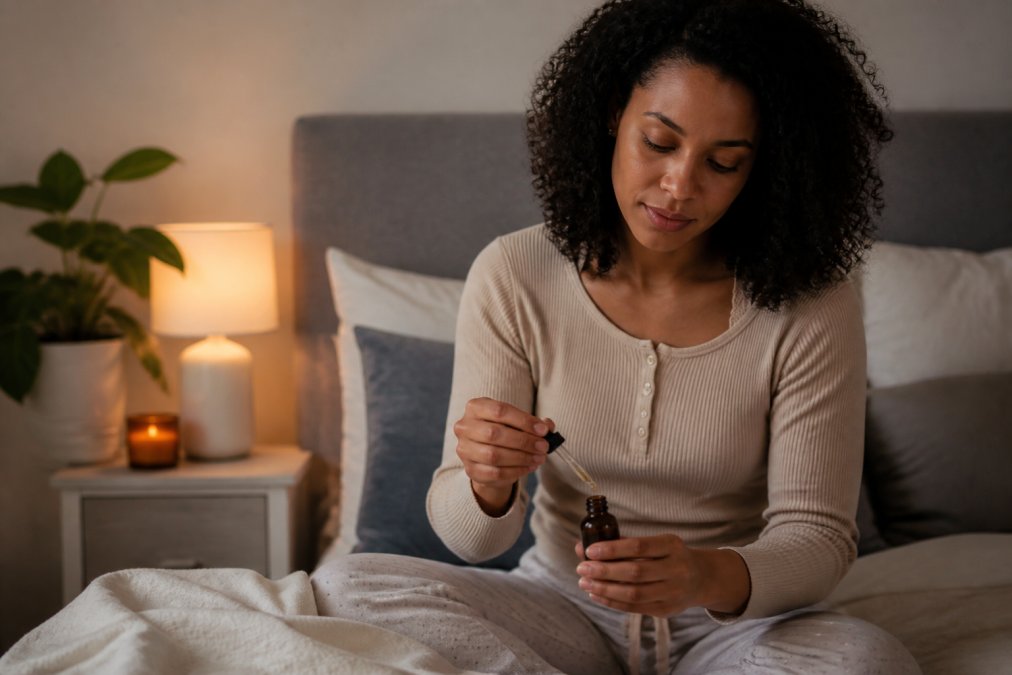
How to Improve Sleep Hygiene Naturally: Foundation for Better Rest
Sleep hygiene, the practices and environment that support quality sleep, is the foundation that makes any natural sleep aid more effective. You could take the best supplement available, but if your sleep environment is poor or your habits work against sleep, results will be limited.
Start with your bedroom environment. Temperature should be cool, ideally between 60 and 67 degrees Fahrenheit. Darkness is essential, even small amounts of light suppress melatonin production. Blackout curtains or a sleep mask are practical solutions. White noise machines or earplugs help if you’re sensitive to environmental sound.
Your pre-sleep routine shapes what happens when you hit the pillow. Screens emit blue light that suppresses melatonin, so stopping screen use 30 to 60 minutes before bed is valuable. Reading, gentle stretching, or meditation during this wind-down period supports the transition into sleep. Consistency matters, your body’s circadian rhythm thrives on regular sleep and wake times.
Caffeine remains in your system for 5 to 6 hours, so afternoon coffee affects nighttime sleep. Alcohol might help you fall asleep initially, but it fragments sleep quality significantly. Eating large meals close to bedtime can cause discomfort that interferes with sleep onset.
Exercise supports sleep quality, but timing matters. Morning or afternoon exercise improves sleep; intense exercise within 3 hours of bedtime can be stimulating. Most people find that 150 minutes of moderate activity per week noticeably improves sleep quality.
These foundational practices work synergistically with natural sleep aids. When you’ve optimized your sleep environment and habits, supplements become more effective.
Safety, Quality Control, and What to Watch For
Natural doesn’t automatically mean risk-free. Understanding potential interactions, quality concerns, and when to seek professional guidance protects your wellness approach.
Drug-Supplement Interactions: What You Need to Know
Drug-supplement interactions are real and sometimes significant. If you’re taking medications, certain natural sleep aids can interfere with how your body processes them.
Magnesium interactions: Magnesium can reduce absorption of several antibiotics and bisphosphonates used for bone health. If you take these medications, separate magnesium supplementation by at least 2 hours. Magnesium also enhances the effects of muscle relaxants and some blood pressure medications.
Valerian root interactions: Valerian may potentiate sedative medications, including prescription sleep aids and benzodiazepines. Combining valerian with these increases drowsiness and impairment risk. It can also interact with medications metabolized by the liver.
L-theanine interactions: Generally well-tolerated, but L-theanine may enhance the effects of stimulant medications and can theoretically interact with blood pressure medications.
CBD interactions: CBD inhibits cytochrome P450 enzymes in the liver, which metabolize dozens of common medications. This affects antidepressants, blood pressure medications, anticoagulants, statins, immunosuppressants, and anti-seizure medications. The interaction doesn’t necessarily mean you can’t use CBD, but your healthcare provider may need to adjust medication timing or dosing.
Best practice: Before starting any new supplement, mention it to your prescribing doctor or pharmacist. Bring the supplement label so they can check the specific ingredients and dosage against your current medications.
Identifying High-Quality Supplements: Beyond the Label
Supplements vary dramatically in actual potency and purity. Third-party testing is your verification tool.
What to look for on the label:
- NSF International certification: NSF tests for contaminants and verifies that the product contains what the label claims.
- USP (United States Pharmacopeia) verification: USP sets standards for supplement manufacturing and tests products for identity, purity, potency, and dissolution.
- Informed Choice certification: Particularly relevant for athletes, this certification verifies that products are free from banned substances.
- ConsumerLab certification: ConsumerLab independently tests supplements and publishes results. You can search their database to see if your supplement has been tested.
Red flags to avoid:
- No third-party testing mentioned
- Vague ingredient sourcing (“proprietary blend” with no breakdown)
- Unusually low prices compared to competitors
- No expiration date or batch number on the label
- Manufacturer contact information missing
Understanding Rebound Insomnia and Supplement Cycling
While natural supplements are non-habit forming, your body can adapt to consistent use. This adaptation doesn’t mean you’re “addicted,” but effectiveness may diminish over time.
When you take magnesium nightly, your body’s natural magnesium regulation adapts. When you take melatonin consistently, your pineal gland’s sensitivity can decrease. This is called tolerance, a normal physiological response.
When you stop a sleep aid you’ve used consistently, some people experience temporary worsening of sleep for a few nights. This is usually mild and resolves within 3 to 7 days as your system recalibrates.
Many practitioners recommend using a supplement for 4 to 8 weeks, then taking a 1 to 2 week break before resuming. This maintains effectiveness better than nightly indefinite use. Some people rotate between different supplements to prevent adaptation to any single option.
If you’ve used a sleep aid for months and want to stop, tapering rather than abrupt cessation minimizes rebound effects. Reduce to every other day for a week, then every third day for another week, then stop.
When to Seek Professional Guidance
Natural sleep aids work well for many people, but some situations warrant professional evaluation:
- Insomnia persists despite 4 to 6 weeks of consistent natural sleep aid use and improved sleep hygiene
- You’re experiencing daytime impairment, difficulty concentrating, mood changes, or fatigue
- You suspect an underlying sleep disorder (loud snoring, gasping for breath during breath, excessive daytime sleepiness)
- You’re on multiple medications and unsure about interactions
- Sleep problems coincide with major life stress or mood changes
A healthcare provider can rule out conditions like sleep apnea or circadian rhythm disorders that require different approaches than supplements alone.
Choosing the Right Natural Sleep Aid for Your Needs
Your specific sleep challenge should guide which natural sleep aid makes sense. If your issue is circadian misalignment, jet lag, or shift work, melatonin is the targeted choice. If physical tension disrupts your sleep, magnesium glycinate addresses that directly. If racing thoughts keep you awake, L-theanine or CBD oil may be more effective.
Consider your timeline. Melatonin and L-theanine work within hours. Herbal remedies like valerian root require consistent use over weeks. CBD oil falls somewhere between.
Personal experimentation is necessary because individual biochemistry varies significantly. Start with one supplement at a time so you can clearly identify what’s helping. Give each option at least 2 to 4 weeks of consistent use before concluding it’s ineffective.
Combining approaches often works better than relying on any single option. Magnesium plus improved sleep hygiene plus an evening CBD oil routine creates redundancy that supports better sleep. This layered approach also means you can use lower doses of each component.
Quality sourcing matters more than most people realize. At CBD Online, we’ve built our reputation on sourcing USDA Organic hemp and working with manufacturers that prioritize third-party testing. We use these products daily ourselves, which means we’re genuinely invested in their effectiveness and safety. Shop Hempworx Products to explore our curated selection of natural sleep support options backed by our 30-day money-back guarantee.
Document your sleep patterns as you experiment. Track sleep onset time, how many times you wake during the night, total sleep duration, and morning alertness. This data reveals what’s actually working rather than relying on subjective impression.
Sleep quality directly affects your health, mood, and daily function. Natural sleep aids offer effective, non-habit forming options for supporting better rest. Whether you choose melatonin for circadian support, magnesium for relaxation, herbal remedies for gentle support, or CBD oil for comprehensive wellness, quality matters. At CBD Online, we’ve spent over a decade sourcing USDA Organic hemp and verified supplements because we believe you deserve products that actually deliver what they promise. Explore our selection of natural sleep support options backed by our 30-day money-back guarantee, because your sleep matters, and so does getting the right support. Learn more about quality CBD sourcing standards
Frequently Asked Questions
Q: What is the safest natural sleep aid to take regularly?
A: Magnesium glycinate and L-theanine are among the safest natural sleep aids for regular use, with minimal side effects and no dependency risk. Melatonin is also considered safe for short-term use, though some people develop tolerance over time. The safest choice depends on your individual health profile and any medications you take. Third-party tested products ensure purity and potency. Always start with the lowest effective dose and consult a healthcare provider if you have underlying health conditions or take other medications.
Q: How do natural sleep aids compare to prescription sleep medications?
A: Natural sleep aids like valerian root, chamomile, and magnesium typically work more gently and carry fewer side effects than prescription medications. They are non-habit forming, though some people may experience tolerance over extended use. Prescription sleep aids often work faster but carry risks of dependency and morning grogginess. Natural options support your body’s own sleep mechanisms through circadian rhythm regulation and relaxation rather than forcing sleep. Many people find natural sleep aids sufficient for mild to moderate sleep issues, while severe insomnia may require professional evaluation.
Q: Can natural sleep aids interact with other medications or supplements?
A: Yes, certain natural sleep aids can interact with medications. Valerian root may interact with sedatives and blood thinners. Magnesium can affect how your body absorbs some antibiotics and bisphosphonates. CBD oil may interact with medications metabolized by the liver, including blood pressure drugs and antihistamines. L-theanine is generally safe but may enhance the effects of stimulants. Always inform your healthcare provider about all supplements you plan to use, especially if you take prescription medications. Third-party tested products should include information about potential interactions.
Q: Which vitamins or minerals support healthy sleep patterns?
A: Magnesium, vitamin D, calcium, and B vitamins all play roles in sleep quality and circadian rhythm regulation. Magnesium helps muscles relax and supports sleep latency. Vitamin D regulates melatonin production and sleep-wake cycles. B vitamins support nervous system function and stress response. Zinc and iron also contribute to sleep architecture. Deficiencies in these micronutrients can disrupt sleep, so maintaining adequate levels through diet or supplementation may improve sleep quality. Testing for deficiencies can help identify which supplements would benefit you most.